Resources
WHRAC Webinars
Hosted by Dr. Laetitia Meyrueix, PhD, one of WHRAC’s Scientific Advisors, this webinar explored PMDD—what it is, how it differs from PME and bipolar disorder, the biology behind it, and pathways for better care and advocacy. Dr. Meyrueix also highlights trusted resources, including IAPMD, for people living with PMDD and those who support them.
PMDD Uncovered: Understanding the Cycle Behind the Struggle
How to Support Friends, Family, and Colleagues Through Infertility and Miscarriage
This recorded workshop—hosted in partnership with the Alumnae-i Network for Harvard Women (ANHW)—offers practical, compassionate guidance on how to support people navigating infertility, pregnancy loss, and reproductive trauma. The session covers what to say (and what not to say), workplace considerations, emotional responses, and ways to show up with empathy and care.
WHRAC Reports
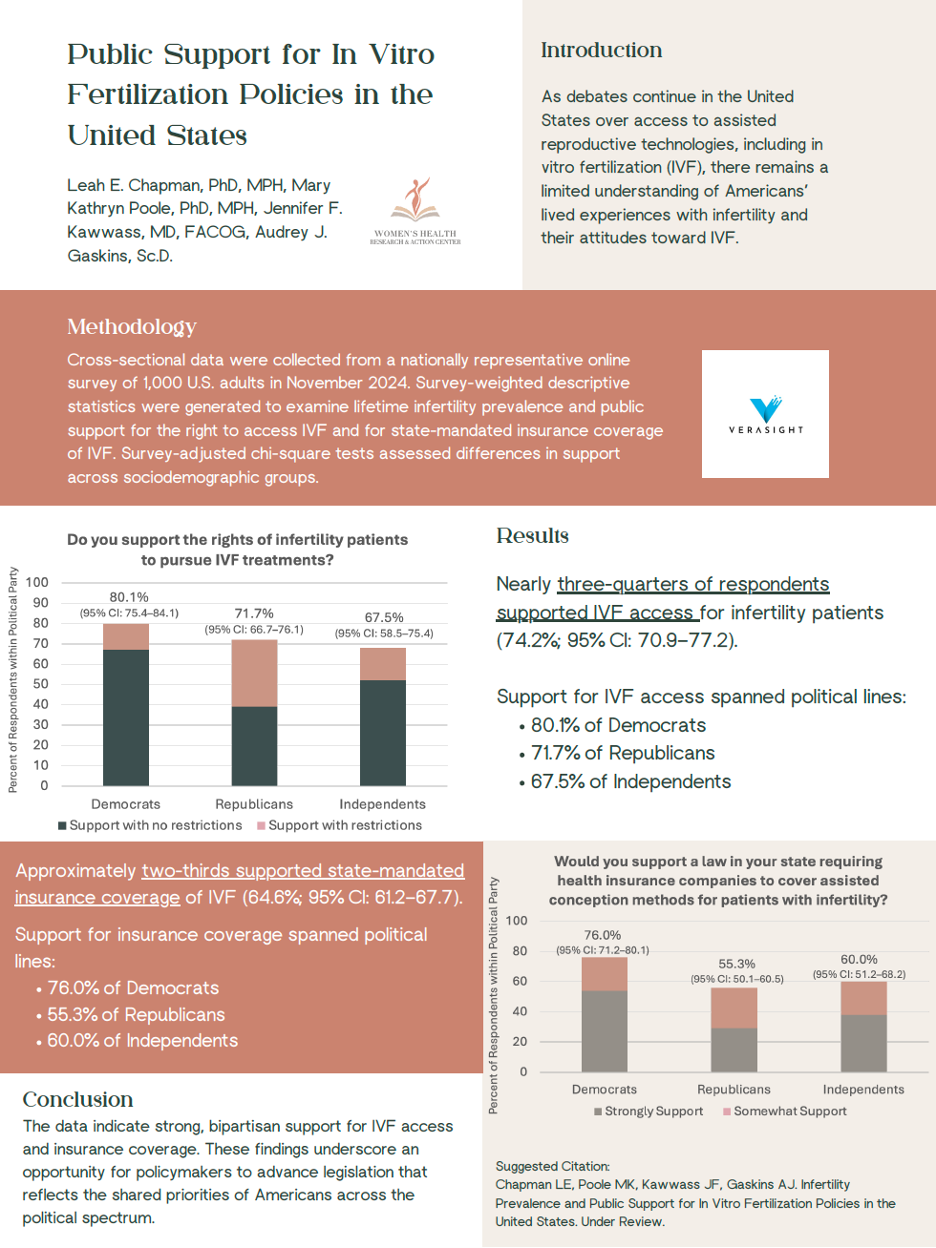
Public Support for In Vitro Fertilization (IVF) Policies in the United States
This brief analyzes nationally representative Verasight survey data on Americans’ attitudes toward IVF access and state-mandated insurance coverage of fertility treatment for infertility patients. It highlights key differences by political affiliation, demographics, and personal experience, and identifies opportunities to advance more equitable access to fertility care.
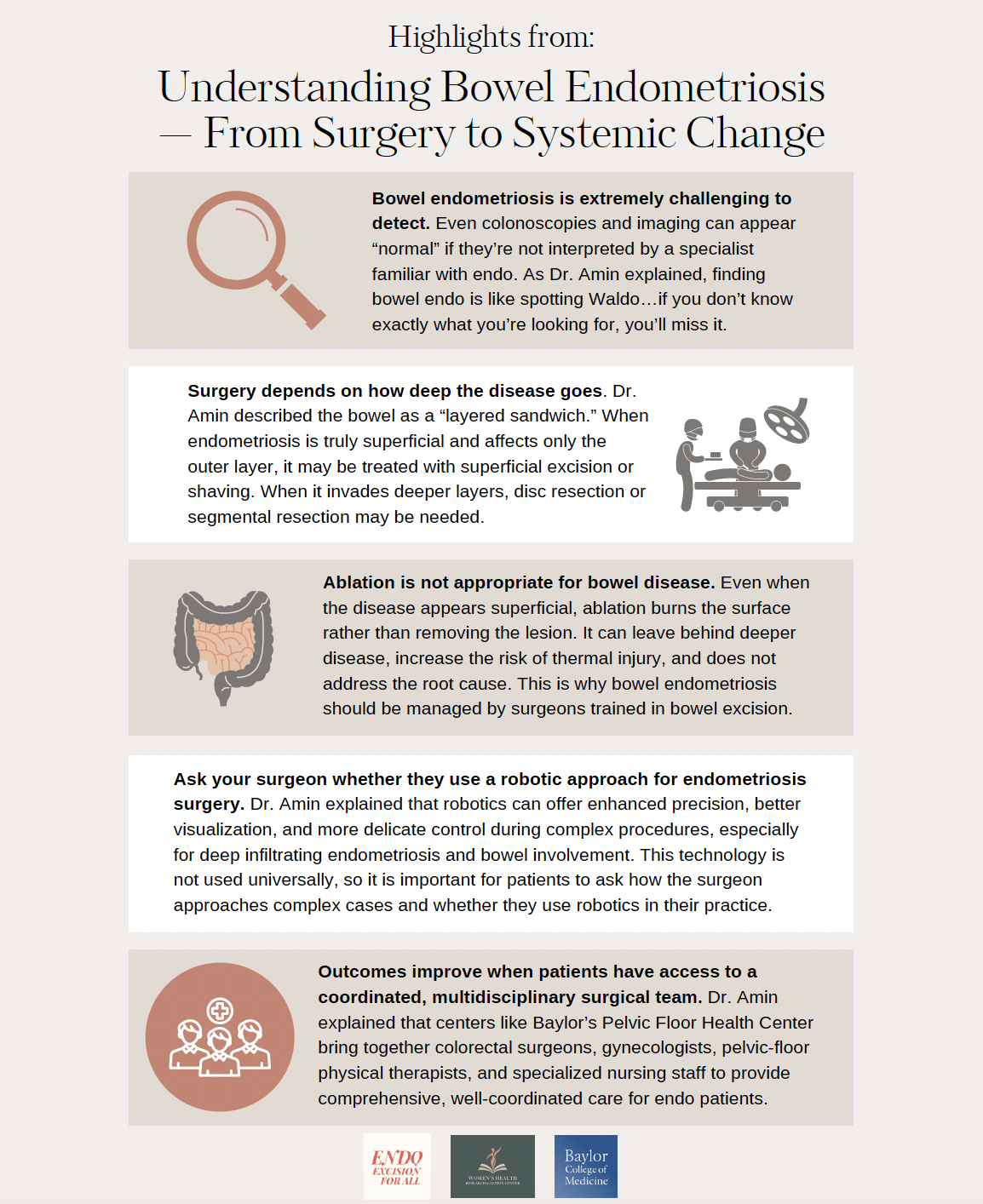
Understanding Bowel Endometriosis— From Surgery to Systemic Change
Bowel endometriosis is often missed on standard imaging or colonoscopy unless interpreted by a specialist, and appropriate treatment depends on how deeply the disease invades the bowel wall. In this webinar co-hosted by WHRAC and Endo Excision for All, Dr. Punam Amin of Baylor College of Medicine emphasized that excision—not ablation—is essential for bowel disease, and that outcomes are best when surgery is performed by a multidisciplinary team with expertise in deep infiltrating endometriosis. She also highlighted major systemic barriers, including inadequate insurance reimbursement and limited cross-specialty communication, which delay diagnosis and restrict patient access to high-quality care.